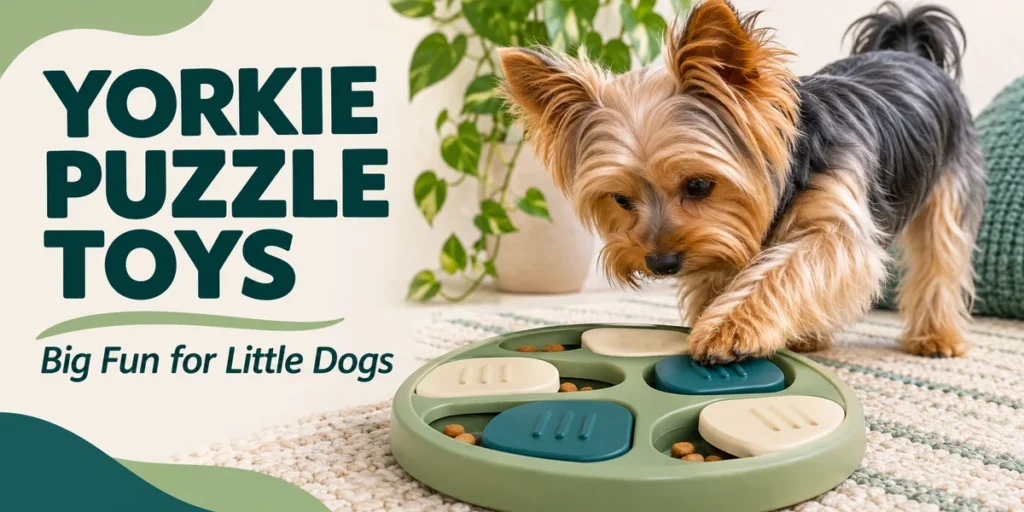
Yorkie puzzle toys can add variety to a small dog’s day, but the best starting point is a toy your dog can use comfortably. A complicated puzzle is not automatically more enriching. For a beginner, finding a few easy food rewards can be more satisfying than struggling with a mechanism that is too heavy or difficult.
Think about the dog in front of you: a gentle sniffer, an enthusiastic chewer, a cautious puppy or a senior who prefers easy access. That information is more useful than choosing by color or buying the most expensive model. This guide explains what to inspect before adding another toy to your basket.
1. Match Yorkie Puzzle Toys to Your Dog’s Size
Look beyond a label that says small dog. Consider the overall dimensions, the depth of food compartments, the size of openings and whether your Yorkie can reach the rewards without awkwardly stretching. Tiny detachable parts are not a benefit simply because the dog is tiny. Check the manufacturer’s size and supervision guidance for the exact version you are buying.
2. Start With an Easy Task
Begin with visible food or covers partly open. Show your dog that interacting gently makes the reward available. If the dog walks away, paws frantically, or chews the whole puzzle, make the task easier or stop. Helping at the beginning does not spoil the activity; it gives the dog a clear way to succeed.
Veterinary behavior guidance from VCA recommends starting foraging activities at an accessible level and adjusting to the individual animal’s interests. Some dogs prefer play or training to a food puzzle, and that is useful information rather than a failure.
VCA enrichment and activity-toy guidance.
3. Look for Stable Construction
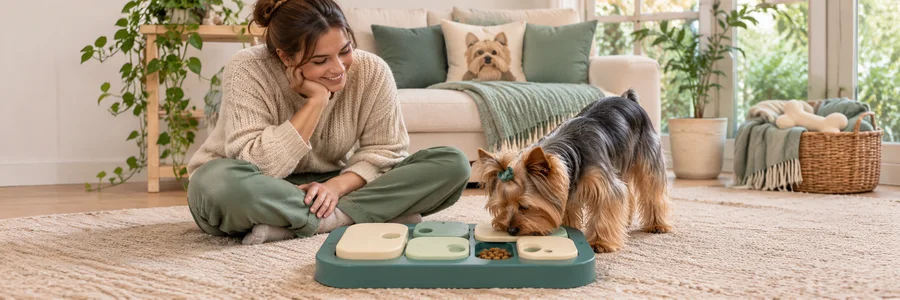
A puzzle that slides across the floor can be frustrating. Place it on a nonslip surface and check that any base grips remain intact. Inspect lids, seams and moving parts before and after each session. Remove a damaged toy promptly, and do not assume that a product labeled durable is impossible to chew apart.
Captive pieces can reduce the number of loose components, but they still need inspection. The important question is whether this particular dog can use the toy without breaking or swallowing parts. Supervision means being close enough to notice and intervene.
4. Make Cleaning Part of the Purchase Decision
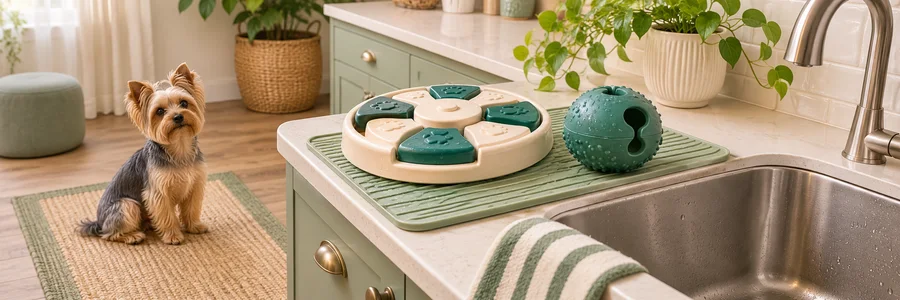
Check how food compartments open and whether you can reach corners. Follow the manufacturer’s washing and drying directions. A toy that is difficult to clean may be inconvenient for daily use, especially if you plan to use moist food. Let components dry before storing them, and discard remaining food rather than leaving it in the puzzle indefinitely.
5. Use Food Thoughtfully
Set aside part of your dog’s normal measured food allowance when appropriate, instead of adding a large extra snack. Keep dietary restrictions in mind and ask your veterinarian about suitable ingredients if your Yorkie follows a special diet. The activity should fit the feeding plan, not quietly replace it with a growing collection of treats.
Make the first session easy enough that you can see how your dog handles the equipment. Avoid making food hard to retrieve before the dog understands the basic game. Fresh water and a comfortable resting place should remain available.
6. Compare Features Before Brands
Use our Amazon collection as a starting point for browsing enrichment supplies. Compare the exact dimensions, difficulty level, removable parts and cleaning instructions on the current listing. Product versions and availability change, so do not buy solely from a photograph or a review describing a different size.
Browse our YorkieLove Pet Supplies collection on Amazon.
A soft snuffle activity, simple food toy and sliding puzzle offer different experiences. You do not need all three at once. Start with one appropriate option, observe several supervised sessions, then decide whether another style would add something useful.
7. Rotate, Observe and Rest
Put the puzzle away after a short successful session. Rotate activities rather than leaving every toy on the floor all day. Watch whether your dog approaches willingly, solves the task calmly and settles afterward. Persistent frustration is a reason to change the activity, not a reason to insist on finishing it.
Puzzle time complements comfortable walks, social contact and rest. It is not a treatment for separation anxiety or a guarantee that a dog can be left alone for longer. Our training guidance offers other ways to build useful habits through short positive sessions.
Explore our Yorkshire Terrier puppy training guide.
Choose Yorkie puzzle toys for accessibility, supervision and enjoyment. The best evidence that an activity fits your dog is their comfortable participation, not how many difficulty levels appear on the box.
As an Amazon Associate I earn from qualifying purchases.