
Yorkie Puppy Care: Your First 30 Days With a Yorkshire Terrier
Affiliate Disclosure: This article may contain affiliate links. YorkieLove.com may earn a small commission from qualifying purchases at no additional cost to you. We only recommend products that may be useful for Yorkshire Terrier owners.
Bringing home a Yorkshire Terrier puppy is exciting, heartwarming and occasionally overwhelming. Your new puppy may be tiny, but the first month involves a surprisingly long list of responsibilities.
During the first 30 days, your Yorkie will begin learning where to sleep, where to go potty, when meals arrive, which household rules apply and whether the new people and surroundings feel safe. The routines you establish now can shape your puppy’s confidence and behavior for years to come.
This Yorkie puppy care guide takes you through the first month one stage at a time. Rather than trying to teach everything immediately, focus on safety, trust, consistency and small daily successes.
Before Bringing Your Yorkie Puppy Home
Prepare your home before your puppy arrives. Yorkie puppies are small enough to squeeze behind furniture, crawl beneath cabinets and reach hazards that owners may overlook.
Get down close to floor level and inspect each room your puppy will enter. Remove electrical cords, medications, cleaning products, toxic plants, small objects and anything that could be chewed or swallowed.
Block access to stairs and rooms that cannot be supervised. A small puppy exercise pen can create a secure area without giving your Yorkie unrestricted access to the entire home.
Yorkie Puppy Supplies to Have Ready
- A properly sized crate or secure sleeping area
- A comfortable, washable puppy bed
- Small stainless-steel or ceramic food and water bowls
- The same puppy food used by the breeder or previous caregiver
- A lightweight collar or small-dog harness
- An identification tag
- A lightweight leash
- Soft training treats
- Safe chew toys sized for a toy-breed puppy
- Puppy pads if they are part of your training plan
- An enzymatic cleaner for accidents
- A gentle Yorkie brush and puppy-safe grooming supplies
Day One: Keep the Arrival Calm
Your family may be eager to hold, play with and photograph the new puppy, but the first day should be calm and predictable. Your Yorkie has just left familiar people, animals, smells and surroundings.
Introduce family members gradually instead of surrounding the puppy all at once. Show your Yorkie the sleeping area, water bowl, food area and designated potty location. Keep exploration limited to one or two puppy-safe rooms at first.
Avoid inviting a house full of visitors during the first day. Your puppy needs time to observe, rest and begin forming a bond with the people in the household.
Your Yorkie Puppy’s First Night
The first night can be difficult because your puppy may be sleeping away from littermates for the first time. Whining does not necessarily mean something is wrong. Your puppy may feel lonely, uncertain or need a potty break.
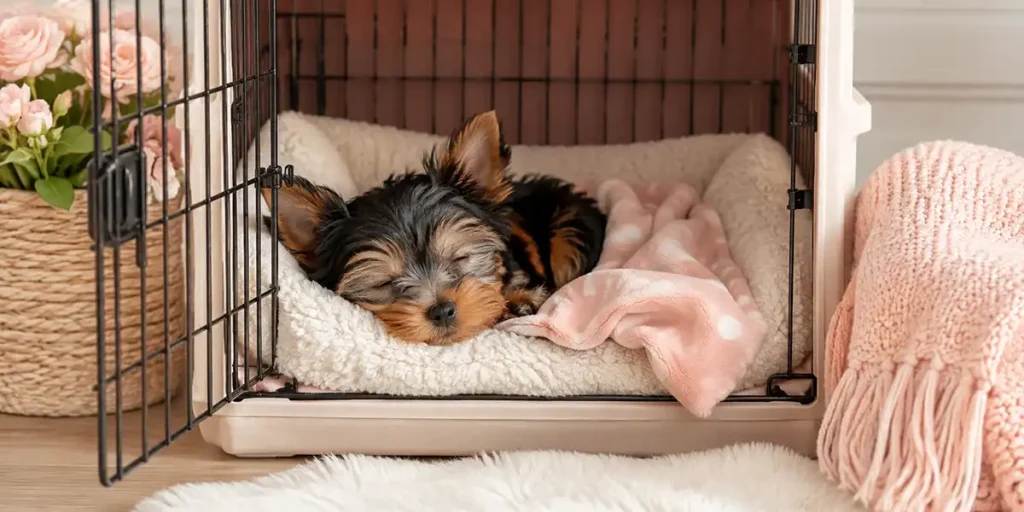
Place the crate or sleeping area close enough that your puppy can hear and sense you. Keeping it near your bed initially can also help you notice when the puppy wakes and needs to go outside.
Make the crate inviting with safe bedding and an appropriate toy. Never use the crate as punishment. Offer a treat when your puppy enters willingly and keep nighttime potty trips quiet, brief and boring.
A regular bedtime helps puppies adjust and supports house-training. The American Kennel Club recommends establishing a consistent bedtime routine and taking puppies for a quiet potty break if they wake during the night.
Week One: Build Safety and Routine
The goal of the first week is not perfect obedience. It is helping your Yorkie understand that the new home is safe and predictable.
Use a simple daily rhythm that includes meals, potty trips, naps, play, brief training sessions and a consistent bedtime. Puppies generally cope better when they can begin anticipating what happens next.
A Simple Yorkie Puppy Schedule
- Wake up and go directly to the potty area
- Serve breakfast
- Return to the potty area after eating
- Allow supervised play and exploration
- Provide a quiet nap
- Repeat potty, meal, play and rest periods throughout the day
- Finish with a calm bedtime routine and final potty trip
Your exact schedule will depend on your puppy’s age, feeding plan and veterinary guidance. The important point is consistency.
Feeding Your Yorkie Puppy
Continue feeding the food your puppy was already eating when possible. A sudden food change can upset a puppy’s stomach during an already stressful transition.
If you plan to change foods, ask your veterinarian how to make the transition gradually. Choose a nutritionally complete puppy food appropriate for toy or small breeds and follow the feeding guidance provided by your veterinarian and food manufacturer.
Because Yorkie puppies are so small, skipped meals or poor appetite deserve attention. Toy-breed puppies can be vulnerable to low blood sugar. Warning signs may include unusual weakness, trembling, disorientation, collapse or seizures. These symptoms require immediate veterinary attention.
Measure each meal instead of leaving an unlimited amount of food available unless your veterinarian has instructed otherwise. Scheduled meals make it easier to monitor appetite and predict potty times.
A set of small stainless-steel puppy bowls can be easier to clean and more appropriately sized for a young Yorkie.
Begin Potty Training Immediately
Your Yorkie will not understand the household potty rules automatically. Begin teaching the correct location from the first day.
Take your puppy to the designated potty area:
- Immediately after waking
- Shortly after eating or drinking
- After active play
- After leaving the crate
- Before bedtime
- Whenever the puppy begins sniffing, circling or wandering away
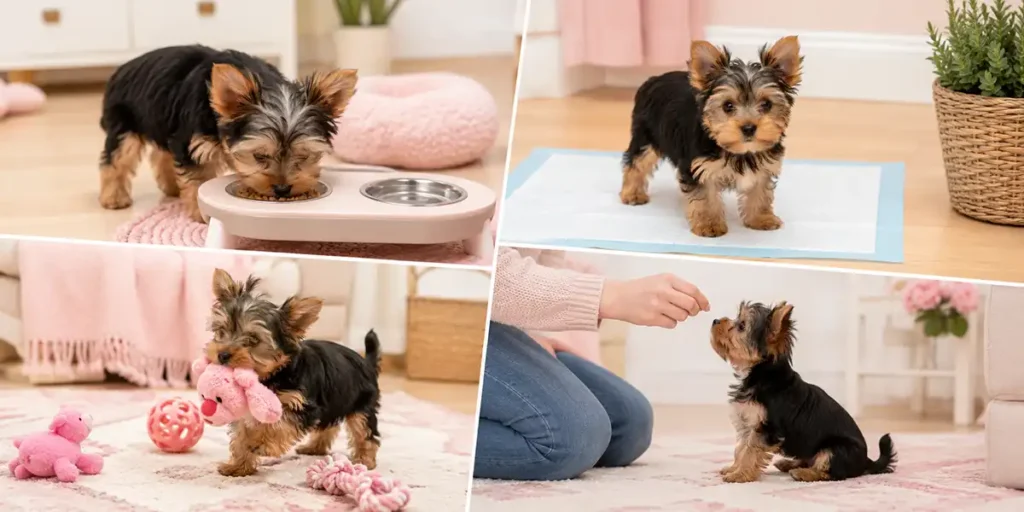
Use the same door, location and verbal cue each time. When your Yorkie finishes, offer praise and a small treat immediately. The reward needs to happen while the puppy can still connect it to the correct behavior.
Accidents are part of puppyhood. Do not yell, frighten or punish your Yorkie. Clean the area thoroughly with an enzymatic pet stain and odor cleaner so the scent does not encourage repeat accidents.
Use the Crate as a Positive Space
A crate can support sleep, travel, safety and potty training when introduced positively. It should feel like a secure bedroom rather than a place of isolation or punishment.
Leave the door open at first and place treats or toys inside. Feed occasional meals near or inside the crate. Begin with short periods and let your puppy out before distress escalates.
The crate should be large enough for your Yorkie to stand, turn around and lie comfortably, but it should not be so large that one end becomes a bathroom.
Schedule a Veterinary Visit
Arrange an initial veterinary appointment shortly after bringing your puppy home. Bring any vaccination, deworming, microchip and health records supplied by the breeder, shelter or previous caregiver.
Your veterinarian can examine your puppy, review nutrition, develop an appropriate vaccination and parasite-prevention plan and answer questions about grooming, dental care, activity and development.
Vaccination decisions should be made with your veterinarian because a puppy’s needs can vary by age, health, lifestyle, geographic area and previous medical care. The AVMA explains that vaccines prepare the immune system to recognize and fight disease-causing organisms.
Do not rely on a generic online schedule as a substitute for individualized veterinary guidance.
Start Gentle Yorkie Puppy Training
Training during the first month should focus on trust, attention and simple household skills. Keep sessions short and positive because young puppies tire and lose focus quickly.
Good first lessons include:
- Responding to the puppy’s name
- Looking toward you when called
- Following a food lure
- Sitting briefly
- Coming a short distance
- Allowing gentle handling
- Entering the crate voluntarily
- Exchanging an object rather than guarding it
Use tiny treats, praise and play to reward successful behavior. Avoid harsh corrections. The first month is about helping your Yorkie enjoy learning and trust your guidance.
Socialize Your Puppy Safely
Socialization means helping your puppy develop positive associations with people, sounds, surfaces, handling, environments and other suitable animals.
The AVMA describes the early puppy socialization period as highly influential for future behavior. However, socialization should be managed alongside your veterinarian’s advice about disease exposure and vaccination status.
Safe early experiences may include:
- Meeting calm adults and supervised children
- Hearing household sounds at a comfortable volume
- Walking across carpet, tile, grass and other safe surfaces
- Taking short car rides in a secured carrier
- Seeing people wearing hats, coats or carrying umbrellas
- Observing the outside world from your arms, carrier or safe location
- Meeting healthy, well-mannered dogs approved by your veterinarian
Never force interaction. Let your Yorkie observe from a comfortable distance and pair new experiences with treats, praise and calm reassurance.
Introduce Grooming During the First Month
Yorkshire Terriers require regular coat and grooming care, so gentle handling should begin early.
Briefly touch your puppy’s paws, ears, mouth, tail and face while offering rewards. Introduce a soft brush for a few seconds at a time. The goal is not a complete grooming session—it is teaching your puppy that handling is safe.
Practice wiping around the eyes, checking the ears and looking inside the mouth. Early cooperation can make future brushing, nail care and veterinary examinations much easier.
A small soft pin brush or puppy grooming brush is a useful first grooming tool for a Yorkie puppy.
Teach Your Yorkie to Spend Short Periods Alone
It is tempting to stay beside a tiny new puppy every minute, but your Yorkie also needs to learn that short separations are safe.
Start while you are still at home. Place your puppy in a safe crate or exercise pen with an appropriate toy, step away briefly and return before the puppy becomes highly distressed.
Gradually build the duration. Avoid going from constant companionship directly to a full workday alone. Small, successful practice sessions can help prevent your puppy from associating every separation with panic.
Protect Your Tiny Puppy From Injury
Yorkie puppies are physically delicate. Supervise interactions with children and larger animals, and teach everyone to sit on the floor before holding the puppy.
Do not allow your Yorkie to jump repeatedly from beds, sofas or other elevated furniture. Use a secure harness and leash outdoors rather than assuming a small puppy will remain nearby.
Check blankets, recliners, doorways and the spaces around your feet before moving or sitting down. A tiny Yorkie can disappear into soft furnishings or move beneath you without warning.
Weeks Two and Three: Expand the Routine
Once your puppy is eating, sleeping and settling more reliably, begin expanding their experiences gradually.
- Practice the puppy’s name and recall every day.
- Extend calm crate periods a little at a time.
- Introduce one or two new experiences each day.
- Continue frequent potty trips.
- Reward calm behavior around household activity.
- Introduce brief leash and harness practice indoors.
- Continue gentle grooming and handling.
Do not rush. Your Yorkie may appear confident one day and cautious the next. Puppy development is not perfectly linear.
Week Four: Review Your Progress
By the end of the first 30 days, your puppy should be more familiar with the household rhythm, but do not expect perfect behavior.
Review what is working and where your Yorkie needs more support. You may notice that potty timing needs adjustment, crate sessions are progressing slowly or certain sounds make your puppy nervous.
Use this information to refine the next month’s routine. Continue building skills gradually instead of comparing your puppy with another dog.
Warning Signs That Need Veterinary Attention
Contact your veterinarian promptly if your puppy develops concerning symptoms such as:
- Refusing food or water
- Repeated vomiting or diarrhea
- Extreme tiredness or weakness
- Trembling, disorientation or collapse
- Difficulty breathing
- Persistent coughing
- A swollen or painful abdomen
- Straining or inability to urinate or defecate
- Possible toxin or foreign-object ingestion
- Injury from a fall, bite or accident
Young toy-breed puppies can become seriously ill quickly. It is safer to call your veterinarian and ask than to wait when your puppy’s condition concerns you.
Your First 30 Days Yorkie Puppy Checklist
- Puppy-proof the home.
- Create a safe sleeping and confinement area.
- Continue the puppy’s familiar food initially.
- Establish regular meals and potty trips.
- Schedule an initial veterinary appointment.
- Begin positive crate training.
- Reward potty success immediately.
- Introduce gentle handling and grooming.
- Practice the puppy’s name and simple commands.
- Provide safe, positive socialization experiences.
- Teach short periods of comfortable separation.
- Supervise interactions with children and larger pets.
- Track appetite, energy, digestion and behavior.
- Celebrate gradual progress rather than expecting perfection.
Final Thoughts on Yorkie Puppy Care
The first 30 days with a Yorkshire Terrier puppy are about more than training. They are about creating trust, safety and communication.
Your puppy will have accidents, restless nights and moments of confusion. That does not mean you are failing. Stay consistent, reward the behavior you want and give your Yorkie time to understand the new world around them.
A calm routine, appropriate veterinary care, positive training and patient socialization will give your puppy a strong foundation. The work you do during this first month can help your tiny Yorkie grow into a confident, healthy and deeply loved companion.