
Why Is My Yorkie Shaking? Common Causes and When to Worry
Dog Health Disclaimer: This article is for general educational purposes and is not a substitute for veterinary diagnosis or treatment. Contact your veterinarian whenever your Yorkie develops sudden, severe or unexplained shaking, weakness, collapse, breathing difficulty, seizures or other concerning symptoms.
Seeing your Yorkshire Terrier suddenly start shaking can be alarming. Yorkies are small dogs, and trembling can sometimes happen for relatively simple reasons such as being cold, excited or nervous.
But shaking can also be a symptom of pain, illness, toxin exposure, low blood sugar or a neurological problem. That means the circumstances surrounding the shaking are important.
If you are wondering, “Why is my Yorkie shaking?” start by looking at what your dog was doing immediately beforehand, how long the trembling lasts and whether any other symptoms are present.
Is It Normal for a Yorkie to Shake?
Occasional trembling does not necessarily mean your Yorkie is sick. Dogs may shake temporarily when they are cold, frightened, excited or overstimulated.
What matters is whether the shaking has an obvious explanation and stops once the situation changes.
For example, a Yorkie that trembles after stepping outside on a cold morning but quickly stops once warmed indoors is very different from a Yorkie that suddenly begins shaking while resting and also seems weak or confused.
1. Your Yorkie May Be Cold
Yorkies are small dogs with relatively little body mass, so some become chilled easily. A short haircut, wet coat, cold flooring, wind or winter weather may make trembling more noticeable.
If your Yorkie seems otherwise completely normal, move the dog somewhere warm and dry. Use a blanket and allow the body temperature to return to normal gradually.

3 Pack Dog Sweaters for Small Dogs Girl Boy Winter Fleece Clothes Warm Soft Dog Sweatshirt Outfit for Dogs
A properly fitted small-dog sweater or lightweight Yorkie coat may help dogs that become uncomfortable during colder outdoor walks.

2. Excitement Can Make a Yorkie Tremble
Some Yorkies shake when they become extremely excited. You may notice trembling when you pick up the leash, prepare dinner, arrive home or introduce a favorite visitor.
Excitement-related trembling usually stops once the dog settles and should not be accompanied by weakness, confusion, vomiting or other signs of illness.
Encouraging calm behavior can help. Wait for your Yorkie to settle before attaching the leash, opening the door or giving highly anticipated rewards.
3. Fear or Anxiety Can Cause Shaking
Fear and anxiety can also cause trembling. Thunderstorms, fireworks, unfamiliar visitors, veterinary appointments, car travel or being left alone may trigger shaking in some Yorkies.
Look for additional stress signals such as:
- Hiding
- Panting
- Pacing
- Whining
- Trying to escape
- Holding the ears back
- Refusing treats
- Seeking constant physical contact
Move your Yorkie away from the trigger when possible and provide a quiet, familiar environment. Persistent or severe anxiety may benefit from guidance from your veterinarian or a qualified behavior professional.
4. Low Blood Sugar Can Cause Yorkie Shaking
Low blood sugar, also called hypoglycemia, is an important potential cause of trembling—particularly in very young toy-breed puppies.
The Merck Veterinary Manual notes that puppy hypoglycemia can occur in toy breeds during the first six months of life. Clinical signs may include tremors, difficulty coordinating movement and other neurological symptoms. :contentReference[oaicite:1]{index=1}
VCA Animal Hospitals lists weakness, collapse, disorientation, tremors and sometimes seizures among typical signs of low blood sugar. :contentReference[oaicite:2]{index=2}
Possible warning signs include:
- Shaking or trembling
- Weakness
- Unsteady walking
- Unusual sleepiness
- Confusion or disorientation
- Collapse
- Seizures
If your Yorkie is shaking and also appears weak, uncoordinated, unusually sleepy, disoriented or collapses, seek veterinary care immediately.
Do not assume every trembling Yorkie simply needs food. A veterinarian should evaluate unexplained episodes because several medical problems can produce similar symptoms.
5. Pain Can Cause Trembling
Dogs sometimes shake when they are uncomfortable or in pain. Because Yorkies cannot tell us exactly where something hurts, trembling may be one of several behavioral clues.
Look for:
- Limping
- Reluctance to jump or walk
- Yelping
- Hiding
- A hunched posture
- Difficulty getting comfortable
- Reduced appetite
- Protecting part of the body
- Sudden changes in personality
If shaking follows a fall, rough play or another possible injury, contact your veterinarian even if there is no obvious wound.
6. Nausea or Digestive Upset
A Yorkie that feels nauseated may tremble or appear unsettled. Shaking alongside vomiting, diarrhea, drooling, repeated swallowing or refusing food deserves closer attention.
Young Yorkies can become dehydrated relatively quickly, so repeated vomiting or diarrhea should be discussed with a veterinarian.
7. Toxin Exposure Can Cause Tremors
Trembling can occur after exposure to certain toxins. This is an emergency situation rather than something to monitor casually at home.
One particularly important household hazard is xylitol, a sweetener found in some sugar-free products. VCA notes that xylitol poisoning can lead to low blood sugar, with signs including weakness, difficulty walking and tremors. :contentReference[oaicite:3]{index=3}
Potential hazards around the home can include:
- Human medications
- Chocolate
- Xylitol-containing products
- Certain household chemicals
- Some insecticides or pesticides
- Recreational drugs
- Unsafe plants
- Other toxic foods or substances
If you suspect your Yorkie has eaten or contacted something toxic, contact a veterinarian or veterinary poison service immediately. Do not wait for additional symptoms to develop.
8. Neurological Problems Can Cause Tremors
Some disorders affecting the nervous system can cause tremors or unusual movements. The Merck Veterinary Manual lists tremors, seizures, pain, coordination problems and weakness among possible signs of nervous-system disease. :contentReference[oaicite:4]{index=4}
Neurological signs that should prompt veterinary attention include:
- Loss of balance
- Walking in circles
- Head tilt
- Repeated falling
- Unusual eye movements
- Muscle weakness
- Seizures
- Sudden behavioral changes
A video recorded safely on your phone can sometimes help your veterinarian understand what the episode looked like.
9. Senior Yorkies May Develop New Causes of Shaking
If an older Yorkie begins trembling for the first time, do not automatically assume the dog is simply aging.
Senior dogs may develop arthritis, pain, metabolic disease, neurological conditions or other health problems that can alter movement and behavior.
A change from your Yorkie’s normal behavior is often more important than the dog’s age itself. Arrange a veterinary examination if trembling becomes frequent or unexplained.
10. A Nursing Mother With Tremors Needs Immediate Attention
A nursing Yorkie that develops tremors requires urgent veterinary assessment. Eclampsia, or dangerously low blood calcium associated with lactation, occurs most commonly in small-breed dogs and can progress from tremors and coordination problems to seizures and life-threatening complications. :contentReference[oaicite:5]{index=5}
Do not attempt to manage this condition at home.
When Is Yorkie Shaking an Emergency?
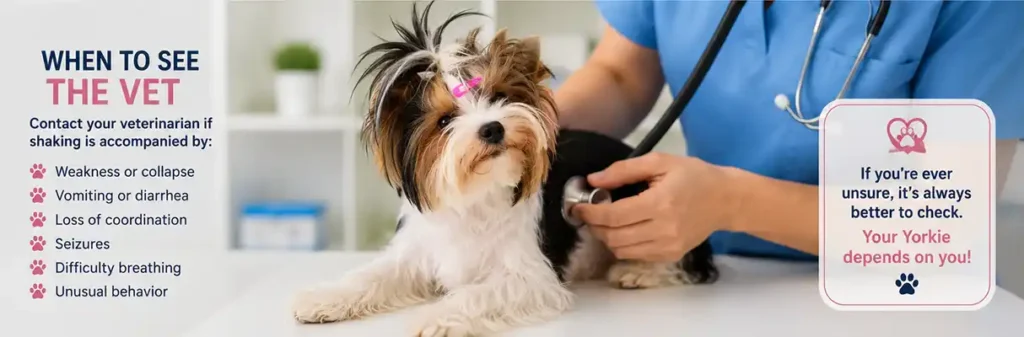
Contact a veterinarian urgently if shaking occurs with any of the following:
- Collapse
- Seizures
- Severe weakness
- Difficulty breathing
- Loss of consciousness
- Difficulty standing or walking
- Repeated vomiting
- Possible toxin ingestion
- Significant injury
- Extreme lethargy
- Confusion or disorientation
- Persistent uncontrolled tremors
A Yorkie showing these symptoms should not simply be wrapped in a blanket and observed at home.
What Should You Do When Your Yorkie Starts Shaking?
First, stay calm and assess the situation.
- Move your Yorkie somewhere safe and quiet.
- Check whether the dog feels cold or wet.
- Look for obvious injury.
- Observe breathing and alertness.
- Check for vomiting, diarrhea or drooling.
- Think about possible toxin exposure.
- Consider when your Yorkie last ate, particularly if it is a puppy.
- Record a short video if it can be done safely.
- Contact your veterinarian if the cause is unclear or symptoms are concerning.
What Not to Do
- Do not give human medication.
- Do not assume all trembling is anxiety.
- Do not force food or water into a weak dog.
- Do not delay treatment after suspected toxin exposure.
- Do not ignore repeated episodes.
- Do not attempt to restrain a dog tightly during a seizure.
- Do not diagnose the problem from shaking alone.
Keep a Record of Shaking Episodes
If your Yorkie experiences intermittent shaking, keep a simple record for your veterinarian.
Write down:
- Date and time
- How long the episode lasted
- What happened immediately beforehand
- When your Yorkie last ate
- Whether exercise occurred
- Other symptoms
- Medications or supplements
- Whether the dog remained alert
- How quickly normal behavior returned
A video can also be very useful because tremors, shivering and seizure activity can look different medically even though owners may describe all of them as “shaking.”
How to Help Prevent Avoidable Shaking
Not every cause of trembling can be prevented, but good everyday care can reduce certain risks.
- Feed an appropriate complete diet on a consistent schedule.
- Do not allow very young puppies to miss meals without veterinary advice.
- Keep dangerous foods and medications securely stored.
- Protect your Yorkie from extreme temperatures.
- Use a secure harness and supervise outdoor activity.
- Keep routine veterinary appointments.
- Watch for changes in appetite, behavior or mobility.
- Introduce stressful experiences gradually.
Final Thoughts: Why Is My Yorkie Shaking?
A Yorkie can shake for many different reasons. Sometimes the explanation is simple—your dog may be chilly, excited or nervous. Other times, trembling can be one of the first clues that something more serious is happening.
Pay attention to the complete picture. Shaking accompanied by weakness, loss of coordination, collapse, seizures, vomiting, injury or suspected poisoning deserves immediate veterinary attention.
For very young Yorkies, low blood sugar is particularly important to recognize. Toy-breed puppy hypoglycemia can cause tremors and neurological symptoms and should not be ignored. :contentReference[oaicite:6]{index=6}
You know your Yorkie’s normal behavior better than anyone. When something suddenly looks wrong, it is always reasonable to contact your veterinarian and ask.
Sources and Further Reading
- VCA Animal Hospitals — Testing for Low Blood Sugar
- Merck Veterinary Manual — Puppy Hypoglycemia
- Merck Veterinary Manual — Eclampsia in Small Animals
- VCA Animal Hospitals — Xylitol Toxicity in Dogs
- Merck Veterinary Manual — Nervous System Disorders in Dogs