How to Brush a Yorkie’s Teeth: Complete Dental Care Guide
Affiliate Disclosure: This article may contain affiliate links. YorkieLove.com may earn a small commission from qualifying purchases at no additional cost to you. We only recommend products that may be helpful for Yorkshire Terrier owners.
Your Yorkie may have a tiny mouth, but dental care is a big part of keeping your Yorkshire Terrier healthy and comfortable.
Plaque begins accumulating on a dog’s teeth after eating. If it is not regularly removed, it can harden into tartar and contribute to inflammation around the gums and teeth. Dental disease can become painful and may eventually require professional veterinary treatment.
The good news is that one of the most effective things you can do at home is remarkably simple: brush your Yorkie’s teeth regularly.
VCA Animal Hospitals recommends daily tooth brushing for Yorkshire Terriers. The American Veterinary Medical Association also says daily brushing is best, although brushing several times each week can still be effective when daily brushing is not practical.
This guide explains how to brush a Yorkie’s teeth, what products to use, how to introduce brushing gradually and which dental warning signs should be checked by your veterinarian.
Why Yorkie Dental Care Matters
Dental problems are common in dogs, and smaller breeds can have crowded mouths that make keeping teeth clean particularly important.
Regular dental care may help control plaque and tartar while also giving you an opportunity to notice changes inside your Yorkie’s mouth early.
A healthy dental routine can help you watch for:
- Plaque or tartar buildup
- Red or swollen gums
- Persistent bad breath
- Loose or damaged teeth
- Difficulty chewing
- Bleeding around the gums
- Changes in appetite
- Unusual sensitivity around the mouth
Bad breath should not automatically be dismissed as normal “dog breath.” The AVMA notes that persistent bad breath can be associated with dental disease and deserves attention, particularly when accompanied by other symptoms.
How Often Should You Brush a Yorkie’s Teeth?
Daily brushing is the ideal goal for most Yorkies. Brushing every day removes plaque before it has as much opportunity to harden into tartar.
If daily brushing is difficult, aim for several sessions each week rather than abandoning the routine completely.
The easiest way to remember is to connect dental care to something you already do every day. For example, brush your Yorkie’s teeth after the final evening potty break or just before your own bedtime routine.
What You Need to Brush Your Yorkie’s Teeth
You do not need a complicated collection of dental products. Start with a few basic supplies designed specifically for dogs.
- A small dog toothbrush
- A soft finger brush if your Yorkie prefers it
- Dog-safe toothpaste
- Tiny treats for positive reinforcement
- A clean towel or comfortable grooming area
A small dog toothbrush and enzymatic dog toothpaste kit can provide an easy starting point for a Yorkie dental-care routine. This one I use for my 3 girls.
Never Use Human Toothpaste
Do not brush your Yorkie’s teeth with human toothpaste. Dogs swallow toothpaste rather than rinsing and spitting it out, so dental products should be specifically formulated for pets.
Choose a toothpaste labeled for dogs and follow the manufacturer’s directions. Dog toothpastes are available in flavors that many dogs find more appealing than mint.
How to Introduce Tooth Brushing Gradually
If your Yorkie has never had its teeth brushed, do not begin by immediately placing a toothbrush deep into the mouth. Introduce dental handling gradually and make each experience positive.
Step 1: Get Your Yorkie Comfortable With Face Handling
Gently touch your Yorkie around the cheeks and muzzle. Lift the lips briefly and reward calm behavior.
Practice for only a few seconds at first. The goal is to teach your dog that having the mouth handled is safe.
Step 2: Introduce the Dog Toothpaste
Place a tiny amount of dog toothpaste on your finger and allow your Yorkie to taste it. If your dog enjoys the flavor, this can make the next steps much easier.
Step 3: Touch the Teeth and Gums
Place a small amount of toothpaste on your finger or a soft finger brush and gently rub along the outside surfaces of a few teeth.
Stop before your Yorkie becomes uncomfortable and reward cooperative behavior.
Step 4: Introduce the Toothbrush
Once your Yorkie tolerates finger handling, introduce a small soft-bristled dog toothbrush.
Allow your dog to sniff and lick the toothbrush first. Then gently brush just a few teeth before ending the session.
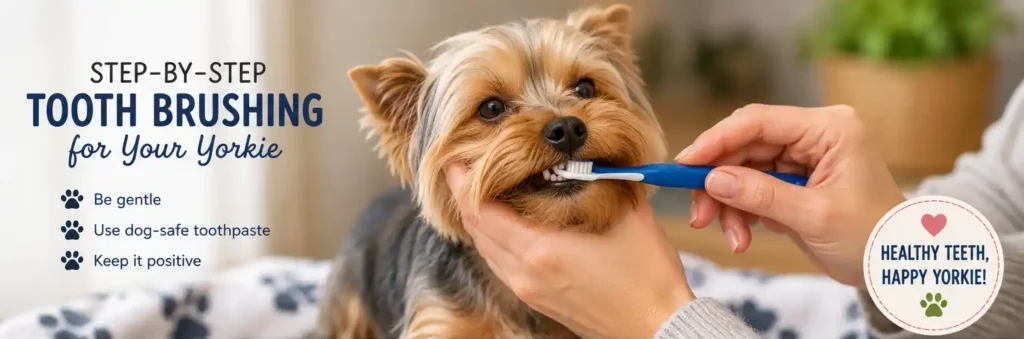
How to Brush a Yorkie’s Teeth Step by Step
Once your Yorkie is comfortable with the toothbrush, use this simple routine.
- Choose a calm location with good lighting.
- Place a small amount of dog toothpaste on the toothbrush.
- Gently lift your Yorkie’s upper lip.
- Hold the brush at a slight angle toward the gumline.
- Use small, gentle circular motions.
- Concentrate on the outside surfaces of the teeth.
- Work gradually from one side of the mouth to the other.
- Keep the session short and positive.
- Reward your Yorkie when you finish.
You do not need to force your Yorkie’s mouth wide open. Most plaque accumulates on the surfaces facing the cheeks, so lifting the lips can give you useful access without making the experience overly stressful.
How Long Should Tooth Brushing Take?
Once your Yorkie is comfortable, a thorough brushing does not need to take long. A minute or two of gentle brushing can become part of the normal daily routine.
During the learning phase, even five or ten seconds may be enough. Gradually increase the duration as your Yorkie becomes more cooperative.
Start Yorkie Dental Care When They Are Young
Puppyhood is an excellent time to introduce tooth brushing because the puppy can learn that mouth handling is simply another normal part of grooming.
Gently inspect your puppy’s mouth as the adult teeth develop. VCA recommends regularly checking a puppy’s mouth during this period because retained baby teeth can sometimes remain beside permanent teeth.
If you notice what appears to be two teeth occupying the same location, an unusual bite or retained baby teeth, ask your veterinarian to examine your puppy.
What About Dental Chews?
Dental chews can complement brushing, but they should not automatically replace it. Choose products appropriate for your Yorkie’s very small size and supervise chewing.
The Veterinary Oral Health Council evaluates dental products for evidence that they help control plaque or tartar. Products that meet its requirements may carry the VOHC Seal of Acceptance.
When shopping for dental products, look for a VOHC-accepted dental chew made for small dogs and make sure the product is appropriate for your Yorkie’s weight and chewing style. I use the Greenies Teenie Dental Treats that are Vet Recommended, but I cut them in half. My three girls are only 4 to 5 pounds each. I also give them the EcoKind Yak Cheese Himalayan Dog Chews, these help them chew and keep their teeth strong.
These are my personal recommendations. 👇🏻

I’ve used these for years: EcoKind Yak Cheese Himalayan Dog Chews, Yak Chews for Small Dogs. Long Lasting Bone for Aggressive Chewers, Only 3 Ingredients, Natural High Protein Dental Dog Treats, No Additives or Lactose
Personally I believe they need to chew to keep their teeth healthy and I would prefer these to sticks or toys.

Greenies Teenie Original Natural Dental Dog Treats, Chicken, 192 Count | Vet-recommended, cleaner teeth after 28 days, cleans to gumline, for dogs 5-15 lbs, original chicken flavor
Personally I cut these in half for my little ones. They are under 5 pounds and I have been giving them these for years now. They love the Blueberry flavored ones.
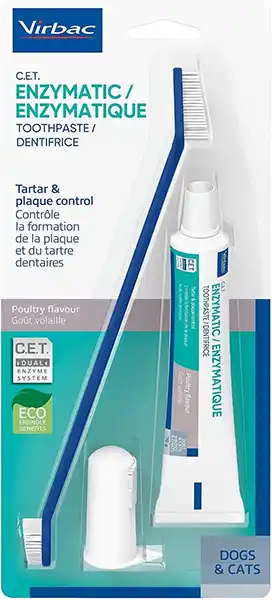
C.E.T. Oral Hygiene Kit for Dogs, Poultry flavor Toothpaste with Toothbrush | Dog toothbrush and toothpaste kit, dog dental kit poultry flavor, pet toothbrushing kit, includes finger brush.
This comes with everything you need. I use this set with my 3 girls.
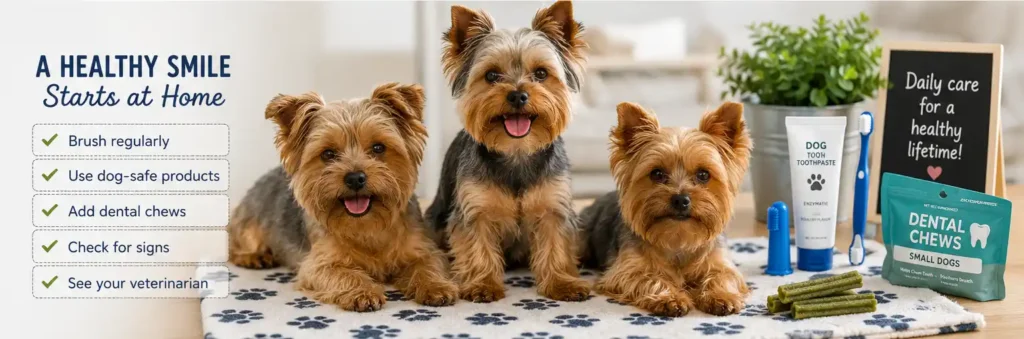
What Does the VOHC Seal Mean?
The Veterinary Oral Health Council reviews evidence submitted for dental products. Products that demonstrate effectiveness under the council’s requirements can receive a seal for helping control plaque, tartar or both.
The current VOHC accepted-products list includes categories such as dental diets, chews, water additives, oral gels, toothpastes, toothbrushes and wipes.
A VOHC seal does not mean a product is the right choice for every individual Yorkie. Ask your veterinarian if you are unsure which dental products are suitable for your dog.
Can Dental Wipes Help?
Dental wipes may be useful for Yorkies that will not immediately tolerate a toothbrush. They allow you to physically wipe the outer surfaces of the teeth and can help your dog become accustomed to mouth handling.
However, brushing remains the preferred form of routine mechanical plaque removal when your Yorkie tolerates it.
Do Water Additives Replace Brushing?
Dental water additives are another option for supporting oral care, but they should generally be considered part of a complete dental routine rather than an automatic replacement for brushing.
If you use one, choose a dog-specific product and follow label instructions carefully. Your veterinarian can help determine whether it is appropriate for your Yorkie.
What Causes Bad Breath in Yorkies?
Occasional mild odor after eating is different from persistent unpleasant breath. Ongoing bad breath can be associated with dental plaque, tartar, inflamed gums or other oral problems.
Contact your veterinarian if bad breath becomes strong or persistent, particularly when accompanied by:
- Red or bleeding gums
- Difficulty eating
- Dropping food
- Loose teeth
- Excessive drooling
- Pawing at the mouth
- Swelling around the face
- Sudden reluctance to chew
Can You Remove Tartar at Home?
Brushing is designed primarily to control plaque before it hardens. Once thick tartar is firmly attached to the teeth, do not attempt to scrape it away yourself with sharp dental instruments.
Your veterinarian can examine the teeth and determine whether professional dental cleaning is required.
Professional Dental Cleaning for Yorkies
Home brushing is important, but some dogs will eventually require professional dental care. Veterinary dental cleaning allows the veterinary team to examine and clean areas that cannot be properly addressed with home brushing alone.
Your veterinarian will recommend professional care based on your Yorkie’s mouth rather than a universal schedule.
Regular wellness examinations provide an opportunity for your veterinarian to inspect your Yorkie’s teeth and gums and recommend the appropriate next steps.
What About Anesthesia-Free Dental Cleaning?
Removing visible material from the surface of a tooth is not the same as performing a complete veterinary dental examination and treatment below the gumline.
If your Yorkie needs professional dental care, discuss the safest and most appropriate procedure with your veterinarian rather than trying to choose treatment based only on cosmetic appearance.
Common Yorkie Tooth-Brushing Mistakes
- Using human toothpaste
- Trying to brush the entire mouth on the first attempt
- Holding the dog too forcefully
- Brushing aggressively at the gumline
- Waiting until severe tartar has already developed
- Using oversized dental chews
- Assuming bad breath is always normal
- Replacing brushing entirely with treats
- Ignoring loose or retained teeth
- Stopping dental care because the Yorkie initially resists
A Simple Yorkie Dental-Care Routine
A practical weekly dental routine might look like this:
- Daily: Brush the teeth whenever possible.
- Several times weekly: Use brushing consistently if daily brushing is not yet achievable.
- Weekly: Take a closer look at the teeth, gums and mouth.
- As appropriate: Use veterinarian-approved or VOHC-accepted dental products.
- Regularly: Have your veterinarian examine your Yorkie’s mouth during wellness appointments.
Yorkie Dental Care Checklist
- Use toothpaste made specifically for dogs.
- Choose a toothbrush sized for a small dog.
- Introduce brushing gradually.
- Aim for daily brushing when possible.
- Reward calm cooperation.
- Check the mouth regularly.
- Watch for bad breath and gum inflammation.
- Choose dental chews appropriate for Yorkie size.
- Look for VOHC-accepted products when appropriate.
- Ask your veterinarian about professional dental care.
Final Thoughts: Keeping Your Yorkie’s Teeth Healthy
Yorkie dental care does not need to be complicated. A small toothbrush, dog-safe toothpaste and a few minutes of consistent care can become part of your normal grooming routine.
Start slowly, make brushing positive and aim for daily care whenever possible. Dental chews and other products may provide additional support, but they work best as part of a broader dental-health plan.
Most importantly, pay attention to changes. Persistent bad breath, painful chewing, bleeding gums or loose teeth are reasons to contact your veterinarian rather than simply adding another dental product.
A healthy Yorkie smile is about much more than fresh breath—it is an important part of keeping your little companion comfortable and healthy.