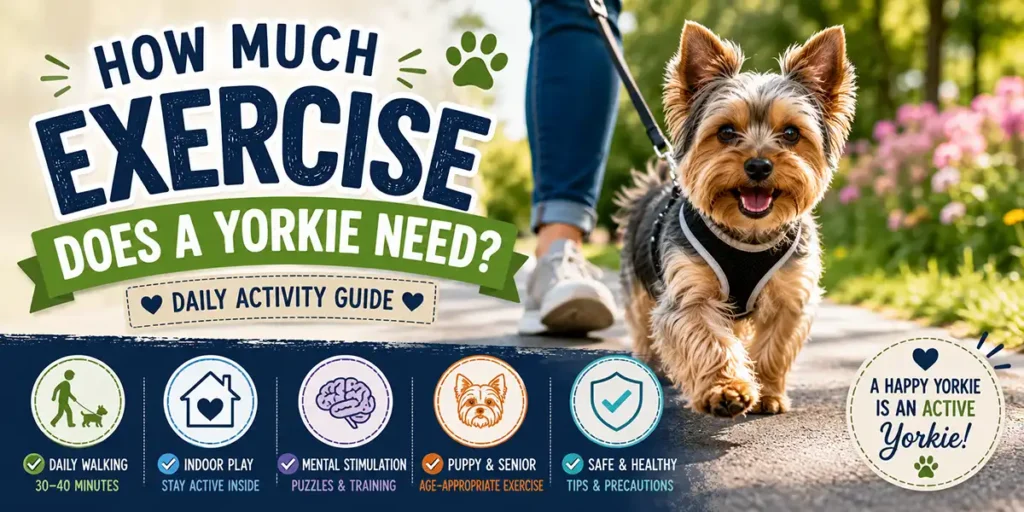
How Much Exercise Does a Yorkie Need? Daily Activity Guide
Affiliate Disclosure: This article may contain affiliate links. YorkieLove.com may earn a small commission from qualifying purchases at no additional cost to you. We only recommend products that may be helpful for Yorkshire Terrier owners.
Yorkshire Terriers may be tiny, but they are not simply decorative lapdogs. Beneath that silky coat is an alert, curious and energetic terrier that benefits from regular movement, play and mental stimulation.
So, how much exercise does a Yorkie need? Most healthy adult Yorkies benefit from approximately 30 to 40 minutes of daily activity. This does not need to happen all at once. Two short walks combined with indoor play and brief training sessions can provide a balanced routine.
The correct amount depends on your Yorkie’s age, health, fitness, personality and environment. A playful young adult may enjoy more activity, while a puppy, senior Yorkie or dog with joint, heart or breathing concerns may need a gentler plan.
How Much Exercise Does an Adult Yorkie Need?
A healthy adult Yorkie will often do well with around 30 to 40 minutes of exercise each day. This can be divided into two or three shorter sessions rather than one long outing.
A practical daily routine might include:
- A 10 to 15 minute morning walk
- A short indoor play or training session
- A 15 to 20 minute afternoon or evening walk
- Additional opportunities to move and explore around the home
Some Yorkies may enjoy longer walks, while others are satisfied with shorter outings and indoor games. Watch your individual dog rather than treating a suggested number as a strict requirement.
Why Yorkies Need Daily Activity
Exercise does more than help a Yorkie burn calories. Regular activity supports physical health, mental wellbeing and better behavior.
Daily Yorkie exercise can help:
- Maintain a healthy body weight
- Support muscles and joint mobility
- Provide mental stimulation
- Reduce boredom and restlessness
- Improve confidence in new environments
- Provide appropriate outlets for terrier energy
- Strengthen the bond between dog and owner
- Support calmer behavior at home
A Yorkie that receives too little stimulation may become noisy, demanding or destructive. Barking, pacing, chewing and repeatedly seeking attention can sometimes be signs that the dog needs more appropriate activity.
Walking a Yorkie
Walking provides physical exercise, but it also gives your Yorkie opportunities to sniff, observe and explore. These mental benefits are one reason an outdoor walk offers something that indoor running alone cannot fully replace.
Allow your Yorkie time to investigate safe smells instead of treating every walk as a race. A slow sniffing walk may be mentally tiring even when the distance is modest.
Two moderately paced walks each day are a practical routine for many adults. Keep the pace appropriate for your Yorkie’s short stride and do not expect a toy-breed dog to maintain the same speed or distance as a much larger breed.
A properly fitted small-dog harness can provide better control while reducing pressure around the neck during walks.

How Much Exercise Does a Yorkie Puppy Need?
Yorkie puppies need activity, but their exercise should come in short, gentle sessions. Their bodies are still developing, and they may become tired quickly.
For a young puppy, exercise may include:
- Brief supervised exploration
- Short play sessions
- Gentle training games
- Age-appropriate walks approved by a veterinarian
- Plenty of naps and quiet recovery time
Avoid forcing a puppy to complete long walks. Puppies often continue playing even when they are tired, so owners need to provide regular rest.
Before walking a young puppy in public areas, ask your veterinarian about vaccination status and local disease risks.
Exercise for a Senior Yorkie
Senior Yorkies still benefit from daily movement, but activity may need to become shorter, slower and more frequent.
An older Yorkie may prefer two or three gentle walks instead of one longer outing. Choose level surfaces and allow extra time for sniffing and comfortable movement.
Senior exercise may include:
- Short, relaxed walks
- Gentle indoor play
- Easy food-search games
- Simple training exercises
- Controlled movement on non-slip flooring
Contact your veterinarian if your senior Yorkie develops limping, stiffness, weakness, reluctance to walk or a sudden change in activity level.
Indoor Exercise for Yorkies
One advantage of living with a small dog is that useful exercise can happen indoors. Indoor activities are especially helpful during heavy rain, extreme cold, wildfire smoke or very hot weather.
Good indoor Yorkie activities include:
- Rolling a soft ball along the floor
- Playing gentle fetch in a hallway
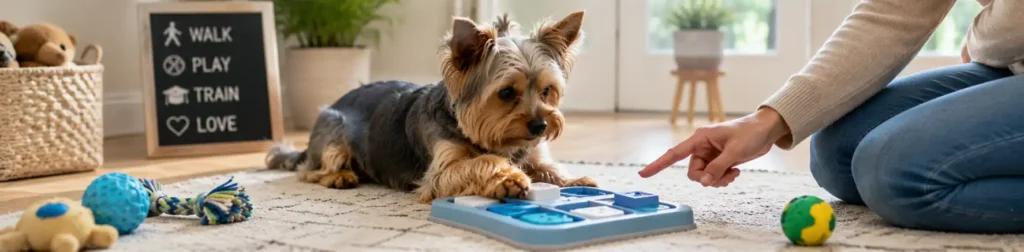
- Using a food puzzle
- Hiding treats around a safe room
- Practicing sit, stay and come
- Teaching simple tricks
- Playing supervised tug with a suitable toy
- Walking through a safe homemade obstacle course
A small-dog puzzle toy can combine activity with problem-solving and may help keep a Yorkie occupied during indoor days.
Mental Exercise Is Important Too
A Yorkie can be physically tired and still mentally restless. Mental enrichment is an important part of a complete activity plan.
Short training sessions challenge your Yorkie to think while improving communication. Practice useful behaviors such as recall, waiting at doors, settling on a mat and walking politely on a leash.
You can also make meals more interesting by placing part of your Yorkie’s measured food in a puzzle feeder or using small portions during training. Remember to include treats and training food in the dog’s total daily intake.
Can Yorkies Go on Long Walks?
Some healthy, conditioned adult Yorkies can enjoy longer outings, but distance should be built gradually. Do not take a dog that normally walks for ten minutes and suddenly expect it to complete a long hike.
Increase walking time slowly and watch for signs of fatigue. Bring water, take breaks and be prepared to carry your Yorkie safely if the dog becomes tired.
Long walks may not be appropriate for puppies, seniors, overweight Yorkies or dogs with medical conditions unless a veterinarian approves the activity.
Can a Yorkie Go Running?
Yorkies may enjoy brief bursts of running during play, but they are not generally ideal long-distance running partners. Their small size and short stride make sustained running more demanding.
A healthy adult Yorkie may enjoy short, controlled jogging intervals after gradually building fitness. Avoid forced running with puppies and consult your veterinarian before beginning a running program.
Exercise Safety for Yorkies
Yorkies are energetic, but their small bodies require sensible precautions.
- Use a secure harness and lightweight leash.
- Avoid repeated jumping from furniture.
- Supervise play with larger dogs.
- Choose safe surfaces without sharp debris.
- Keep your Yorkie away from traffic and uncontrolled animals.
- Carry water during longer outings.
- Check paws after walks.
- Use reflective equipment in low light.
- Adjust activity for age and health.
Exercising a Yorkie in Hot Weather
Small dogs can still overheat. During warm weather, walk in the cooler morning or evening hours and avoid hot pavement.
Test the walking surface with your hand. If it feels uncomfortably hot, it may be too hot for your Yorkie’s paws.
Provide water and watch for heavy panting, weakness, excessive drooling, confusion or collapse. Move your dog to a cooler location and seek veterinary assistance if overheating is suspected.
Exercising a Yorkie in Cold or Wet Weather
Yorkies may become uncomfortable quickly in cold, wet or windy weather. Their small bodies are close to the ground, and wet coat hair can make them feel colder.
Keep outdoor trips shorter during severe weather and provide indoor activity instead. A well-fitted small-dog sweater or weather-resistant coat may help some Yorkies stay more comfortable.
Dry the coat and paws thoroughly after wet walks.
Signs Your Yorkie Needs More Exercise
Your Yorkie may benefit from additional activity or enrichment if you notice:
- Restlessness and pacing
- Repeated attention-seeking
- Excessive barking
- Destructive chewing
- Difficulty settling
- Weight gain
- Constantly bringing toys
- Excitability caused by boredom
These behaviors can have several causes, so exercise is not always the only solution. Training, routine, anxiety and health should also be considered.
Signs Your Yorkie May Be Getting Too Much Exercise
More exercise is not always better. Your Yorkie may be overdoing it if you notice:
- Lagging behind during walks
- Sitting or lying down repeatedly
- Heavy or unusual panting
- Limping or stiffness
- Reluctance to exercise the following day
- Sore or damaged paw pads
- Weakness or loss of coordination
- Difficulty recovering after activity
Stop the activity and allow your Yorkie to rest. Seek veterinary advice if symptoms are severe, persistent or unusual.
A Sample Yorkie Exercise Schedule
A healthy adult Yorkie’s routine might look like this:
- Morning: 10- to 15-minute sniffing walk and potty break
- Midday: Five minutes of training or a food puzzle
- Afternoon: Short indoor play session
- Evening: 15- to 20-minute relaxed walk
- Before bed: Brief potty trip and calm settling activity
This is only an example. Adjust the routine to your Yorkie’s age, health, energy level and veterinary recommendations.
When to Ask Your Veterinarian About Exercise
Consult your veterinarian before significantly increasing activity if your Yorkie:
- Is a young puppy or senior dog
- Is overweight
- Has a heart, breathing or joint condition
- Has experienced knee or spinal problems
- Has recently had surgery or an injury
- Shows coughing, weakness, limping or exercise intolerance
A veterinarian can help create an activity plan that is safe for your individual dog.
Yorkie Exercise Checklist
- Aim for approximately 30 to 40 minutes of daily activity for a healthy adult.
- Divide exercise into shorter sessions.
- Include walks, play and mental stimulation.
- Use a secure small-dog harness.
- Adjust exercise for puppies and seniors.
- Avoid extreme heat and cold.
- Increase distance gradually.
- Watch for fatigue, limping or overheating.
- Provide rest and fresh water.
- Ask your veterinarian about medical concerns.
Final Thoughts: How Much Exercise Does a Yorkie Need?
Most healthy adult Yorkshire Terriers benefit from around 30 to 40 minutes of daily activity, divided between short walks, play and mentally engaging exercises.
Your Yorkie does not need to run for miles to stay active. Consistent movement, opportunities to sniff, indoor games and short training sessions can provide an effective routine.
Pay attention to your individual dog. The best Yorkie exercise plan is one that keeps your companion interested, comfortable and healthy without causing exhaustion or discomfort.