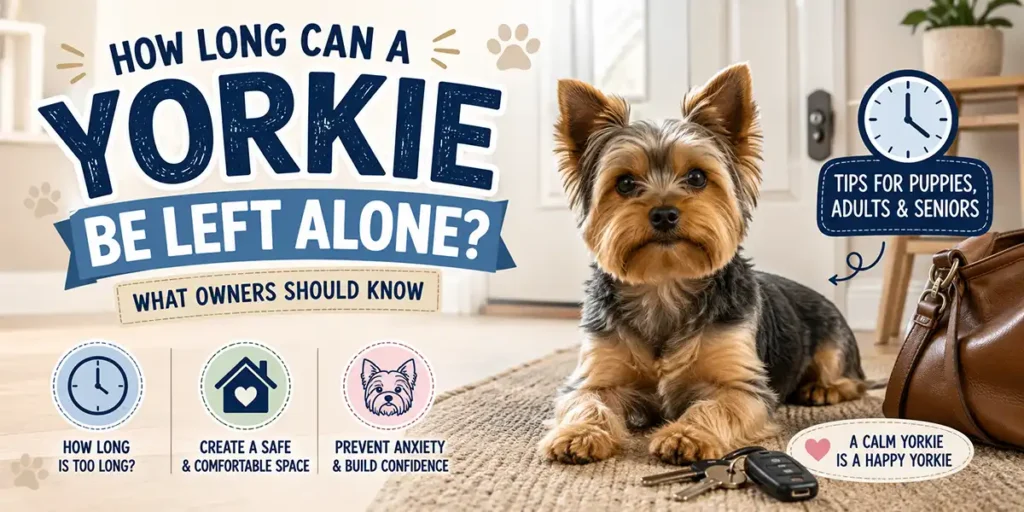
How Long Can a Yorkie Be Left Alone? What Owners Should Know
Affiliate Disclosure: This article may contain affiliate links. YorkieLove.com may earn a small commission from qualifying purchases at no additional cost to you. We only recommend products that may be helpful for Yorkshire Terrier owners.
Yorkshire Terriers are affectionate little dogs that often become deeply attached to their people. They may follow you from room to room, curl up beside you and want to be involved in almost everything you do.
That close bond is one of the reasons Yorkies make such loving companions—but it can also make alone time difficult.
So, how long can a Yorkie be left alone? The answer depends on the dog’s age, health, potty-training progress, confidence and previous experience. A calm adult Yorkie may be comfortable alone for several hours, while a puppy, senior dog or Yorkie with separation anxiety may need much more frequent attention.
The goal is not simply to find the maximum number of hours your Yorkie can tolerate. It is to create a routine that keeps your dog safe, comfortable and emotionally secure.
How Long Can an Adult Yorkie Be Left Alone?
Many healthy, well-trained adult Yorkies can manage approximately four to six hours alone during the day. Some may tolerate a little longer occasionally, but regularly leaving a Yorkie alone for an entire workday may lead to boredom, potty accidents, barking or anxiety.
Every dog is different. One Yorkie may nap peacefully for several hours, while another becomes distressed after only a short separation.
Consider these factors when deciding how long your Yorkie can be left alone:
- Age and overall health
- Bladder and bowel control
- Previous alone-time training
- Activity and exercise needs
- History of separation anxiety
- Access to water and a safe resting area
- Temperature and household safety
- Whether someone can provide a midday visit
A Yorkie that appears physically capable of holding its bladder may still become lonely, bored or anxious when left alone too long.
How Long Can a Yorkie Puppy Be Left Alone?
Yorkie puppies need much more frequent care than adults. They have small bladders, developing digestive systems and limited experience with being separated from people.
A young Yorkie puppy may need a potty opportunity every one to two hours while awake. Older puppies may gradually manage longer intervals, but they should not be expected to handle a full workday alone.
Puppies also need regular meals, socialization, safe play, training and supervision. Long periods of isolation can interfere with potty training and make alone time feel frightening.
When introducing a Yorkie puppy to alone time, begin with very short periods. Step away for a few seconds, return calmly and gradually increase the duration. The puppy should learn that departures are temporary and that you always come back.
Can a Senior Yorkie Be Left Alone?
Senior Yorkies may need more frequent bathroom breaks and closer monitoring than younger adults. Age-related changes can affect mobility, hearing, vision, digestion, bladder control and confidence.
An older Yorkie that was previously comfortable alone may begin showing restlessness, confusion or accidents. Sudden behavior changes should be discussed with a veterinarian because discomfort or age-related health issues may be involved.
Senior Yorkies often benefit from:
- Shorter periods alone
- More frequent potty opportunities
- Easy access to food and water
- A supportive, comfortable bed
- Non-slip flooring
- Consistent household routines
- Midday visits from a trusted person
Why Yorkies May Struggle With Being Alone
Yorkies were bred to be alert and active, and modern Yorkies are often closely bonded companion dogs. They tend to notice household movement and may become accustomed to following their owners throughout the day.
A Yorkie may struggle with being alone because of:
- Lack of gradual alone-time training
- A sudden change in the owner’s schedule
- Moving to a new home
- Loss of a person or companion animal
- Boredom and insufficient enrichment
- Fear of noises or activity outside
- Previous negative experiences
- Separation anxiety
Dogs that have rarely been alone may find a sudden eight-hour separation extremely difficult. Independence should be developed gradually, even when someone is usually home.
Signs Your Yorkie Is Not Coping Well Alone
Some Yorkies show obvious distress, while others develop more subtle signs. A pet camera can help you observe what happens after you leave.
Possible signs of difficulty include:
- Continuous barking, whining or howling
- Pacing or inability to settle
- Scratching or chewing doors and windows
- Destructive behavior near exits
- Drooling, panting or trembling
- Potty accidents despite being house-trained
- Refusing food when alone
- Trying to escape a crate or room
- Extreme excitement when the owner returns
- Following the owner constantly before departure
Occasional boredom is not necessarily separation anxiety. True separation-related distress can be intense and may begin shortly after the owner leaves.
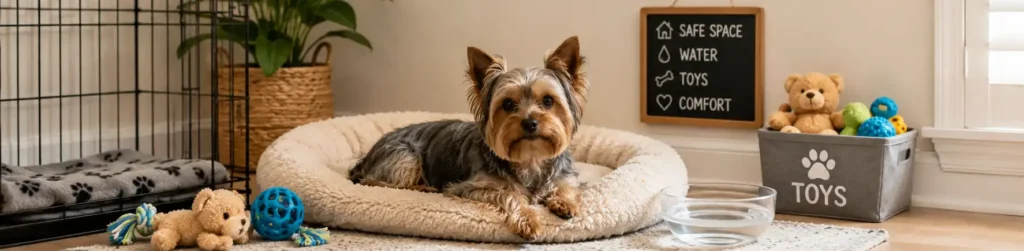
Create a Safe Area for Your Yorkie
Your Yorkie should have a secure and comfortable area while home alone. This may be a puppy-proofed room, an exercise pen or another limited section of the home.
The area should include:
- A comfortable bed or resting mat
- Fresh water in a stable bowl
- Safe toys or enrichment activities
- A comfortable room temperature
- No accessible cords, medications or dangerous objects
- No open doors, balconies or escape routes
- An appropriate potty option when necessary
A small-dog exercise pen can provide more movement than a crate while still limiting access to unsafe parts of the home.
Should You Crate a Yorkie While You Are Away?
A crate can be useful for short periods when a Yorkie has been introduced to it positively. It can provide a secure sleeping area and prevent access to household hazards.
However, a crate should not be used to contain a dog for an entire day. Yorkies need opportunities to move, stretch, drink, relieve themselves and engage with their environment.
Never place a Yorkie in a crate for a long separation without first building positive crate associations. A dog that panics in a crate may injure itself trying to escape.
For longer daytime absences, a secure puppy-proofed room or exercise pen may be more appropriate than a closed crate.
Exercise Your Yorkie Before Leaving
A Yorkie is more likely to rest when its physical and mental needs have been met. Before leaving, provide an age-appropriate walk, potty break, play session or short training activity.
The goal is not to exhaust your dog. A calm combination of movement, sniffing and mental activity can help reduce restlessness.
A helpful departure routine might include:
- A short walk or indoor play session
- A potty opportunity
- A few minutes of simple training
- Fresh water
- A safe food puzzle or enrichment toy
- A calm, low-key departure
Provide Safe Mental Enrichment
Boredom can contribute to barking, chewing and restlessness. Safe enrichment gives your Yorkie something positive to do after you leave.
Options may include:
- A small food-dispensing toy
- A lick mat with a veterinarian-approved filling
- A puzzle feeder designed for small dogs
- A safe chew selected for your Yorkie’s size
- A rotating selection of familiar toys
Choose toys carefully. Do not leave your Yorkie alone with an item that can break apart, become lodged in the mouth or create a choking hazard.
A small-dog puzzle feeder may help your Yorkie associate your departure with a rewarding activity.
How to Teach a Yorkie to Be Alone
Alone-time training should begin before you need to leave your Yorkie for several hours.
Step 1: Encourage Independence While You Are Home
Give your Yorkie opportunities to relax on a bed or mat without sitting directly beside you. Reward calm behavior and avoid responding to every request for attention immediately.
Step 2: Practice Moving Out of Sight
Walk into another room briefly and return before your Yorkie becomes upset. Repeat until the dog remains calm.
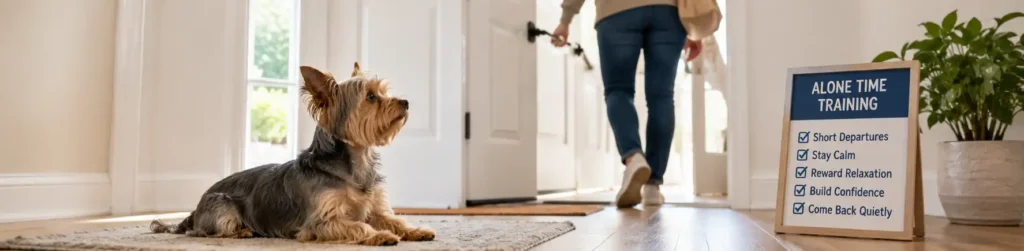
Step 3: Introduce Departure Cues
Pick up your keys, put on your shoes or open the door without always leaving. This can help prevent these actions from becoming powerful anxiety triggers.
Step 4: Leave for Very Short Periods
Step outside for a few seconds and return calmly. Gradually extend the time only when your Yorkie remains relaxed.
Step 5: Build Duration Slowly
Increase the separation in small increments. Progress may move from seconds to minutes and eventually to longer periods.
If your Yorkie becomes distressed, the training advanced too quickly. Return to a shorter, successful interval.
Keep Departures and Arrivals Calm
Long emotional goodbyes can make leaving feel like a major event. Instead, prepare your Yorkie’s safe area, provide enrichment and leave calmly.
When you return, greet your Yorkie warmly but avoid creating overwhelming excitement. Wait for a calmer moment before giving enthusiastic attention.
The message should be simple: people leave, people return and neither event needs to feel frightening.
Can Music or Television Help?
Some Yorkies relax with soft background sound, especially if the home feels unusually quiet when everyone leaves. Calm music, low-volume television or a white-noise machine may help cover hallway sounds, traffic or outdoor noises.
Background sound is not a treatment for separation anxiety, but it may make the environment more comfortable for some dogs.
Consider a Midday Dog Walker or Visitor
If you regularly work long hours, arrange for someone to visit your Yorkie during the day. A trusted family member, neighbour, pet sitter or dog walker can provide a potty break, companionship and activity.
This is especially important for puppies, senior Yorkies and dogs with health needs.
Before hiring someone, check references, discuss your Yorkie’s routine and arrange a supervised introduction.
Is Doggy Daycare Right for a Yorkie?
Doggy daycare may work for confident, social Yorkies, but it is not suitable for every dog. A tiny Yorkie can be vulnerable around larger or highly energetic dogs.
Look for a facility that separates dogs by size, temperament and play style. Ask how staff supervise interactions, manage rest periods and respond to stress.
A quiet Yorkie may prefer an in-home pet sitter or midday visit rather than a busy group environment.
What Not to Do When Leaving a Yorkie Alone
- Do not suddenly leave an untrained Yorkie alone for an entire day.
- Do not punish barking, accidents or damage caused by distress.
- Do not leave unsafe toys or chews unattended.
- Do not confine a panicking dog in a crate.
- Do not assume another pet will automatically prevent anxiety.
- Do not restrict access to fresh water.
- Do not ignore sudden changes in behavior.
- Do not rely on a camera as a substitute for care and interaction.
When to Seek Professional Help
Seek veterinary or professional behavioral support if your Yorkie panics when left alone, attempts to escape, injures itself, refuses food, destroys doors or windows, or vocalizes continuously.
A veterinarian can rule out medical conditions and discuss appropriate treatment. A qualified reward-based trainer or veterinary behavior professional can help create a gradual separation plan.
Severe separation anxiety is not stubbornness or bad behavior. It is genuine distress and should be treated with patience and professional guidance.
Yorkie Home-Alone Checklist
- Provide exercise and a potty break before leaving.
- Use a safe, puppy-proofed area.
- Leave fresh water available.
- Provide safe enrichment.
- Keep departures calm.
- Build alone time gradually.
- Use a camera to observe behavior when helpful.
- Arrange a midday visit during longer absences.
- Adjust the routine for puppies and seniors.
- Seek help if your Yorkie shows panic or severe distress.
Final Thoughts: How Long Can a Yorkie Be Left Alone?
Many adult Yorkies can remain alone for approximately four to six hours when they have been trained gradually and their physical and emotional needs are met. Puppies, seniors and Yorkies with anxiety usually require shorter periods and more frequent attention.
The right amount of alone time depends on the individual dog. Pay attention to your Yorkie’s behavior rather than focusing only on the clock.
With gradual training, a safe environment, appropriate enrichment and a dependable routine, your Yorkshire Terrier can learn that being alone for reasonable periods is safe—and that you will always return.