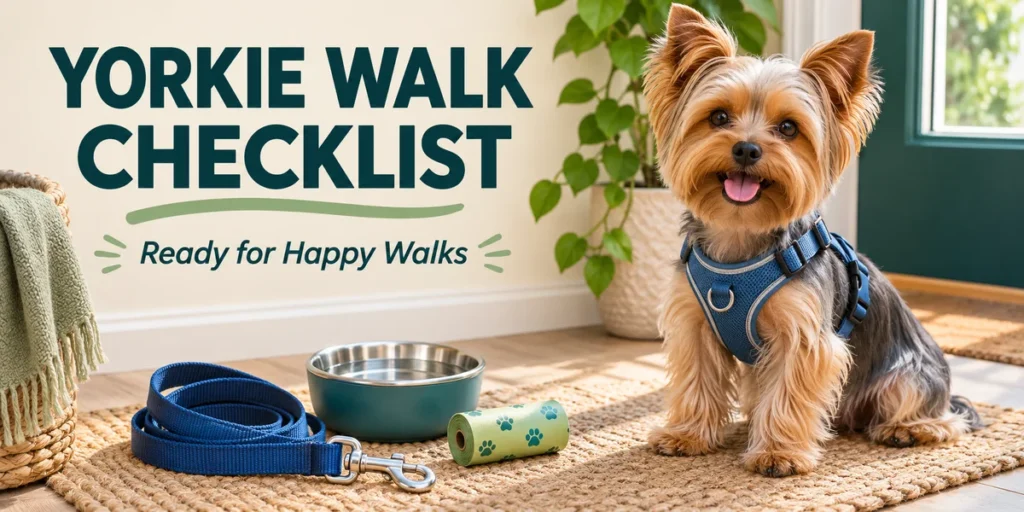
A Yorkie walking checklist makes leaving the house easier by putting the essentials in a predictable order. Small dogs still need equipment that fits, a suitable route and an owner who notices how they are coping. A few moments at the door can prevent a walk from beginning with a twisted strap, an empty water bottle or a missing waste bag.
Use this checklist as a flexible routine, not a demand to walk a certain distance every day. Your dog’s age, health, experience and the conditions outside all matter. If your Yorkie has an exercise restriction, follow the veterinary plan rather than a generic timetable.
1. Start Your Yorkie Walking Checklist With Fit
Check the harness each time you put it on. Make sure straps lie flat, buckles fasten fully and the attachment point is secure. Look for rubbing behind the legs and enough room for natural movement. Recheck sizing as a puppy grows or if your adult dog’s weight changes. A harness that fitted last season is not automatically right today.
For details about measuring and comparing styles, use our harness guide. The size name on a package is less useful than your dog’s actual measurements and the manufacturer’s chart for that exact model.
Read our guide to choosing the best harness for a Yorkie.
2. Inspect the Leash and Identification
Look along the leash for fraying and test that the clip closes properly. Choose hardware you can control without unnecessary weight on a small dog. Keep identification information current and check that tags are readable. Avoid wrapping the leash tightly around your hand, and keep your attention on the dog when crossing roads or passing other animals.
A fixed-length leash is a straightforward option for everyday neighborhood walking. Whatever equipment you choose, learn how it works before using it near traffic. Accessories should support control and comfort rather than make handling more complicated.
3. Pack a Small, Useful Kit
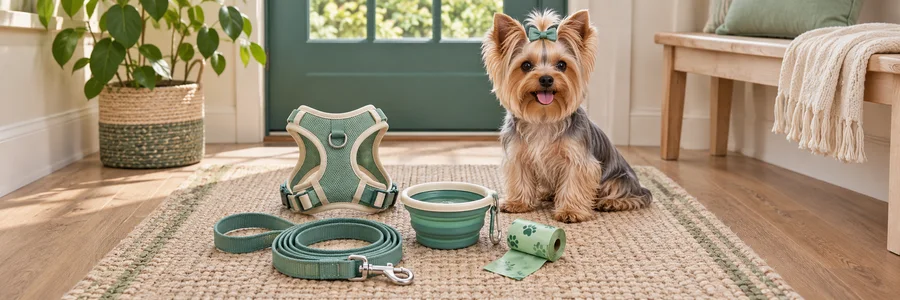
Keep waste bags near the door and replenish them after use. Bring water and an appropriate bowl when the outing or weather calls for it. A few suitable rewards can help reinforce calm behavior, while a phone gives you a way to contact someone if needed. Pack only what you can carry comfortably while keeping a secure hold on the leash.
Our Amazon collection includes walking supplies to compare. The Voyager Step-in Air is one harness option in the collection; measure carefully and check the exact size chart before ordering. A popular listing does not guarantee a fit for every Yorkshire Terrier.
Check Voyager Step-in Air harness sizes on Amazon.
4. Look at Conditions Before Leaving
Check the weather, visibility and walking surface. Wet leaves, ice, hot pavement and debris can change an otherwise familiar route. Choose a shorter or sheltered outing when conditions make that more comfortable, and avoid treating a raincoat or other accessory as permission to ignore the weather.
Plan a route with a convenient way home. A loop with no easy exit may be inconvenient if your dog becomes uncomfortable halfway through. Keep expectations modest when trying a new place, especially if your Yorkie is still learning to walk around distractions.
5. Leave Room for Sniffing and Choice
A useful walk includes opportunities to investigate at a comfortable pace. Pause in safe places, allow a little sniffing and reward attention when you need to move on. Avoid dragging your dog toward something frightening or requiring greetings with every person and dog you pass. Space is often the easiest way to keep an encounter calm.
The AKC’s walking and fitness safety guidance emphasizes planning around the dog and the equipment. Build activity gradually rather than measuring success only by distance or speed.
6. Notice Changes During the Walk
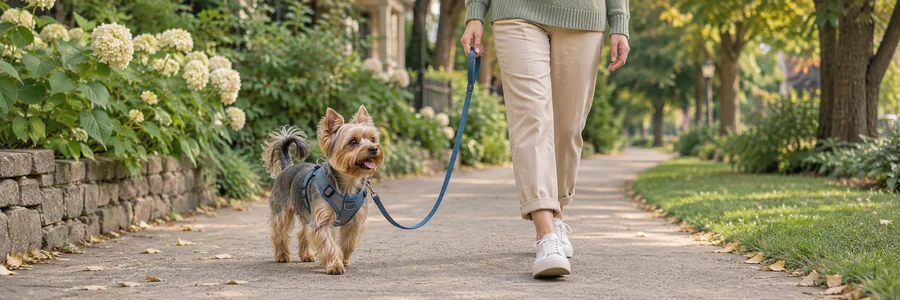
Watch for lagging, limping, repeated stopping or unusual breathing. End the outing and seek veterinary advice when symptoms warrant it; urgent breathing difficulty or collapse needs immediate care. Do not assume a dog refusing to continue simply needs firmer encouragement. Conditions and comfort can change even on a familiar route.
Keep the leash relaxed where it is safe to do so and avoid sudden jerks. If pulling or fear makes walks difficult, ask a qualified reward-based trainer for help with a plan appropriate to your dog.
7. Check In When You Get Home
Remove walking equipment and inspect the coat and paws for debris or rubbing. Dry damp areas gently and offer water. Put the leash back in its usual place, refill the bag dispenser and note any equipment issue before the next walk. This small reset keeps tomorrow’s preparation simple.
Use the Yorkie walking checklist consistently while adapting the outing itself. Comfortable equipment, a thoughtful route and attention to your dog’s behavior make a better foundation than an ambitious distance target. The best walk is one both of you can enjoy and recover from comfortably.
As an Amazon Associate I earn from qualifying purchases.