
A good Yorkie bath routine begins before the water runs. Preparing towels, checking the coat and choosing a comfortable setup can make the difference between an organized wash and a scramble with a wet, worried dog. The aim is clean skin and a manageable coat, not a heavily perfumed dog or a rigid bathing calendar.
Bathing needs vary with coat length, outdoor activity, skin condition and the products your veterinarian recommends. If your Yorkie has persistent itching, sores, unusual odor or greasy skin, get advice before experimenting with more frequent baths. A medicated treatment plan is different from routine grooming and should follow professional instructions.
1. Prepare Your Yorkie Bath Routine
Gather a dog-appropriate shampoo, towels, a rinse cup or gentle sprayer and a nonslip mat. Read the product label before starting, including any dilution and contact-time instructions. Keep the room comfortable and clear away objects that could fall into the bathing area. Place everything within reach so your dog is never left alone on a raised surface.
Choose a time when you can dry the coat afterward. A hurried bath just before leaving home is usually less practical than a session with time for breaks. If your dog is new to the area, reward calm investigation of the dry basin first.
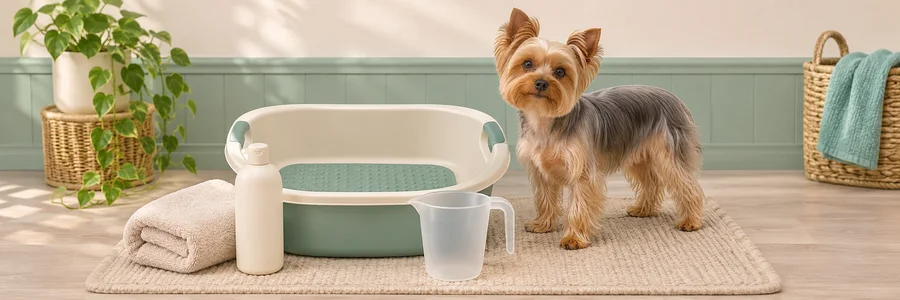
2. Check the Coat First
Look for tangles, debris and tender areas before wetting the coat. A badly matted coat needs professional help; soaking it does not make painful knots a simple brushing job. Work gently through manageable tangles using an approach your groomer has shown you, and stop if the skin is uncomfortable.
A quick coat check also helps you notice changes worth discussing with your veterinarian. Make a note of a sore patch rather than scrubbing it harder or covering it with a scented product.
3. Use a Stable, Gentle Setup
Test the water so it feels comfortably lukewarm, and keep the flow gentle. Support your dog without squeezing or forcing them into an awkward position. A nonslip surface helps the dog stand without constantly scrambling for footing. Keep the water shallow and supervise throughout the entire bath.
If your Yorkie panics at a sprayer, try a quieter rinse cup and shorter introductions. Progress might mean standing calmly in the dry basin today and experiencing a little water another day. A full bath is not the only successful practice session.
4. Keep Shampoo Away From Sensitive Areas
Use a product intended for dogs and follow its directions. Avoid spraying into eyes, ears or nose. A soft damp cloth can be a more controlled way to clean around the face, taking care not to rub the eyes. Do not use human shampoo, household cleaners or improvised essential-oil mixtures as substitutes.
The AKC’s home-grooming guidance covers bathing and other routine care. Product labels and veterinary advice should guide any special skin treatment rather than assuming one shampoo suits every Yorkie.
5. Rinse Patiently
Rinse the coat thoroughly, including areas under the body where residue can hide. Work methodically so you do not repeatedly wet a section you already finished. Keep watching your dog’s comfort and footing. If you are using a conditioner, follow that label too; adding extra product does not necessarily improve the result.
Our store collection can help you browse grooming supplies. Compare ingredient information, intended use, package directions and current availability rather than choosing by fragrance or a dramatic before-and-after photo.
Browse our YorkieLove Pet Supplies collection on Amazon.

6. Dry Gently and Check Comfort
Use towels to blot and gently squeeze moisture from the hair rather than vigorously rubbing it into tangles. Keep your Yorkie warm and supervised while drying. If you use a dryer, follow safe equipment guidance, avoid hot air and introduce its sound gradually. Never leave a dog unattended with a dryer or force a frightened dog to tolerate it.
Choose the simplest drying method that works for your dog’s coat and comfort. A professional groomer can demonstrate an approach if the coat remains difficult to dry or brushing afterward repeatedly causes trouble.
7. Learn From Each Wash Day
Write down which product you used and how the coat and skin looked afterward. Notice whether the dog tolerated the mat, water noise and drying separately. That helps you improve one part of the process next time instead of changing everything at once.
Explore our Yorkshire Terrier puppy training guide.
A practical Yorkie bath routine is predictable, gentle and suited to the individual dog. Keep supplies simple, take skin changes seriously, and build comfort through short practice sessions between full baths. The best wash day ends with a comfortable dog and a coat you can maintain without a struggle.
As an Amazon Associate I earn from qualifying purchases.